
Sports
How Big Is a Football Field? Find All Its Dimensions


Football is one of the most popular sports in the world, and whether you are a player, coach, or fan, understanding the size of a football field is essential. Knowing how big a football field is helps you understand the game, the space players have to move, and how strategies are planned.
A standard American football field is 120 yards long from the back of one end zone to the back of the other end zone and 53.3 yards wide. In feet, that’s about 360 feet long and 160 feet wide, giving a total area of roughly 57,600 square feet, or just over 1.3 acres. These measurements include the end zones, which are the scoring areas at each end of the field.
The Field of Play on a Football Field
The main part of the football field, known as the field of play, measures 100 yards in length. This is the space where most of the action happens, where players run, pass, and try to score. The width of the field remains the same at 53.3 yards, which allows enough space for offensive and defensive plays.
The field is rectangular, with grass or artificial turf providing the surface. This rectangular shape is crucial because it gives teams a clear area for movement and helps referees judge whether the ball or players are in bounds.
End Zones on a Football Field
At both ends of the football field are the end zones, where teams score points by either carrying the ball across the goal line or kicking it through the goalposts. Each end zone is 10 yards deep and stretches the full width of the field, from sideline to sideline.

End zones are not only important for scoring but also add extra space for plays to develop. When a player enters the end zone with the ball, it counts as a touchdown, making these areas the most exciting parts of the field.
Sidelines and End Lines
The sidelines run along the length of the field on both sides. They mark the outer boundaries of the playing area and keep players within bounds. Each sideline is 6 feet wide, extending the entire length of the field.
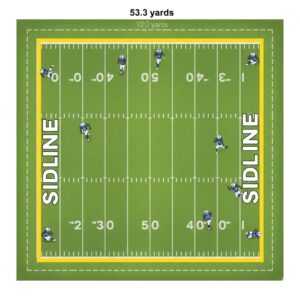
The end lines are located at the back of each end zone. They run the width of the field, measuring 53.3 yards, and help define the area where touchdowns are scored. Goalposts are placed on the end lines, and referees use these lines to determine when a play ends.
Goal Lines on a Football Field
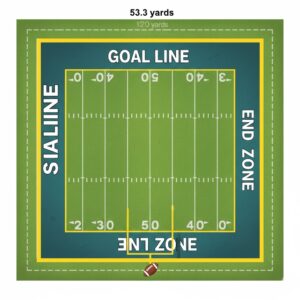
The goal lines are placed 10 yards in front of the end lines, marking the beginning of the end zones. They stretch from one sideline to the other, maintaining the field’s width at 53.3 yards. A team must cross the goal line with the ball to score a touchdown. These lines are a critical reference point for players and referees alike.
Yard Lines on a Football Field
Yard lines are the horizontal lines that divide the field into sections, making it easier to measure progress during the game. They run across the field from sideline to sideline and are marked every yard. Numbers are placed every 10 yards, starting from 10 and counting up to 50 at midfield, then decreasing back to 10 approaching the opposite goal line.
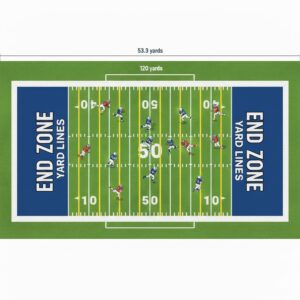
These lines help players know how far they have advanced toward the opposing end zone and help referees track first downs and scoring opportunities.
Hash Marks on a Football Field
Hash marks are the small lines that run vertically in the center of the field. They are used to place the ball at the start of each play and ensure the game stays organized. Each hash mark is 24 inches long and 4 inches wide.
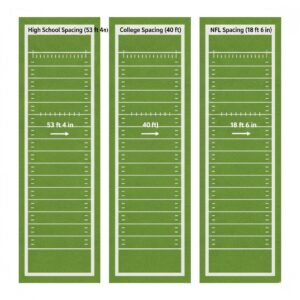
The distance between hash marks varies depending on the level of play. In high school football, hash marks are 53 feet, 4 inches apart. In college football, they are 40 feet apart, and in the NFL, the distance narrows to 18 feet, 6 inches. Hash marks help referees and players know exactly where the ball is placed and maintain consistent measurements for every play.
Goalposts on a Football Field
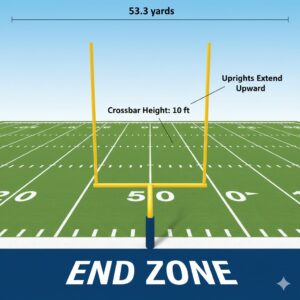
Goalposts are placed at the back of each end zone on the end line. The standard width between the uprights is 18 feet, 6 inches in professional football. The crossbar stands 10 feet high, and the uprights extend at least 35 feet above the crossbar, giving kickers a clear target for field goals and extra points.
Extra Features and Field Safety
Modern football fields often include padding along end zones and team areas outside the sidelines to ensure player safety. Some fields have synthetic turf with markings that are painted or embedded into the surface. These innovations make the game safer and easier to play at all levels, from youth leagues to professional football.
Why Knowing How Big a Football Field Is Matters
Understanding how big a football field is helps players, coaches, and fans alike. It allows coaches to plan plays that use the entire width and length of the field efficiently. Players know how much space they have to maneuver. Fans can follow the action better when they understand the layout. Even referees rely on these measurements to make accurate calls during the game.
Fun Comparisons to Visualize a Football Field
To help visualize, a football field is about the length of a city block and slightly wider than a basketball court is long. If you imagine lining up 11 cars side by side along the field’s width, it would roughly fill the space. These comparisons make it easier to picture just how large a football field really is.
Conclusion
A football field may look simple at first, but every line, mark, and measurement plays an important role in the game. From the end zones where touchdowns happen to the hash marks that guide every play, understanding the size of a football field gives players, coaches, and fans a better appreciation of football. Knowing that the field is 120 yards long and 53.3 yards wide helps everyone understand the space, strategy, and excitement that make football such a beloved sport.
FAQs
How long is a football field without end zones?
The main field of play is 100 yards long, which is where most of the action happens.
How wide is a football field?
A standard field is 53.3 yards wide, giving enough space for players to run and strategize.
What are hash marks used for?
Hash marks indicate where the ball should be placed at the start of each play and help maintain consistent measurements across the field.
How deep are the end zones?
Each end zone is 10 yards deep, providing the scoring area for touchdowns.
Are football fields the same size at all levels?
The total length and width remain the same, but the distance between hash marks changes depending on high school, college, or professional football.


Football is one of the most popular sports in the world, and many people know that a match is “90 minutes long.” But is that the whole story? In reality, the time you spend watching or playing football can be a little longer or shorter depending on the rules, the players, and even the type of game. Let’s explore how long is a football game really lasts and why it can sometimes feel longer than expected.
Standard Football Match Duration
A typical football game consists of two halves, each lasting 45 minutes. Between these halves, players take a break called halftime, usually around 15 minutes. During this time, teams rest, drink water, and discuss strategies for the second half. So when you add the halves and halftime together, you get about 105 minutes in total.
But the game doesn’t always end exactly at 90 minutes. Referees often add a few extra minutes, called stoppage time, to make up for injuries, substitutions, or other delays. This is why a game that seems to be 90 minutes long can sometimes feel like it lasts nearly two hours from start to finish.
Extra Time in Important Matches
In some tournaments, like the World Cup or Champions League, matches cannot end in a draw when a winner must be decided. In these cases, extra time is played. Extra time consists of two halves of 15 minutes each, with a short break in between. If the score is still tied after extra time, the game is decided by a penalty shootout, which can take several more minutes.
So in knockout games, a football match can last well over two hours. This is why fans often say that big tournament games feel much longer than a regular league match.
Youth Football and Game Duration
Football isn’t just for adults. Children and teenagers play it too, but their games are shorter to match their energy and abilities. Younger players usually play two halves of 25 to 40 minutes, depending on their age group. Halftime is also shorter, and extra time is reduced or sometimes skipped entirely.

This way, young players can enjoy the game without getting too tired, while still learning the rules and practicing teamwork. Even in children’s football, the basic structure of two halves with a break remains the same as professional games.
Table: Typical Football Game Durations
| Type of Match | Half Length | Halftime | Extra Time | Approximate Total Time |
|---|---|---|---|---|
| Professional Standard Match | 45 mins | 15 mins | No | 105 mins |
| Knockout Match with Extra Time | 45 mins | 15 mins | 30 mins | 135–140+ mins |
| Youth U13–U15 | 30–35 mins | 10–15 mins | 10 mins | 75–85 mins |
| Youth U10–U12 | 25–30 mins | 5–10 mins | 10 mins | 60–70 mins |
| Adapted/Blind Football | 20–25 mins | 5–10 mins | Optional | 50–60 mins |
This table helps readers quickly see how long a football game can last depending on the type of match.
Special Formats and Adapted Games
Football isn’t only played on standard fields with regular rules. Adapted versions, like blind football or small-sided matches, have their own time rules. These games are often shorter, sometimes lasting just 20 to 50 minutes in total. The main goal is to make football enjoyable and safe for everyone, no matter their abilities.
These adaptations show how flexible football can be. Whether it’s for fun, practice, or competition, the sport can adjust to the players and still keep its excitement.
Fun Facts About Football Game Lengths
Football can be surprisingly long when people push the limits. Did you know the longest football match ever recorded lasted seven days? That’s 168 hours of continuous play! Of course, this was a very unusual event, but it shows how football can take on many forms.

Even in regular games, fans sometimes feel like matches drag on, especially during tense moments like penalty shootouts or stoppage time in the final minutes. The length of a football game can change depending on what’s happening on the field, which keeps players and spectators on their toes.
Why Understanding Game Length is Important
Knowing how long a football game lasts helps players, fans, and parents plan their day. For young players, it’s important to pace themselves, stay hydrated, and take breaks when needed. For fans, it means being ready for the full excitement of a match, including extra time or penalties. Understanding game duration also makes football more fun because you know what to expect and can enjoy every thrilling moment without surprises.
Conclusion
So, how long is a football game? At the professional level, a standard match is 90 minutes, but with halftime and stoppage time, it usually lasts around 105 minutes. Knockout games with extra time and penalties can last over 140 minutes. Youth games are shorter, and adapted versions of football adjust the time even more.
No matter the length, football is a game full of excitement, teamwork, and surprises. Understanding game duration helps you enjoy every minute whether you are playing, watching, or cheering from the sidelines.
FAQs
1. How long is a football game for professional players?
A professional football game usually has two halves of 45 minutes, with a 15-minute halftime. With stoppage time included, the total duration is typically around 105 minutes.
2. How long is a football game if it goes into extra time?
In knockout tournaments, a football game can include two extra halves of 15 minutes each. With halftime and possible penalties, a match can last more than 140 minutes.
3. How long is a youth football game?
Youth football matches are shorter than professional games. Depending on the age group, halves can range from 25 to 40 minutes, and extra time is often shorter or skipped.
4. How long is a football game in adapted formats like blind football?
Adapted games like blind football are usually 20 to 25 minutes per half, with short breaks. The total time can range from 50 to 60 minutes.
5. Why does a football game sometimes feel longer than 90 minutes?
Referees add stoppage time to make up for injuries, substitutions, and other delays. Extra time in knockout games or penalty shootouts also extends the total duration, making games feel longer.


The anticipation is palpable as the Washington Commanders gear up to face off against the Philadelphia Eagles. This clash of NFC East rivals promises to deliver excitement and intensity, with both teams eager to assert their dominance in the division. Fans are buzzing about who will come out on top, but it’s not just team pride at stake; player performance can make or break this thrilling matchup. As we dive into the stats and standout athletes from both sides, prepare for an analysis that reveals what you really need to know about the Washington Commanders vs Philadelphia Eagles match player stats. Whether you’re a die-hard fan or a casual observer, there’s plenty here to ignite your passion for football!
Comparison of Team Stats
When looking at the Washington Commanders and Philadelphia Eagles, their team stats tell an intriguing story.
Offensively, both teams boast strong capabilities. The Commanders rely on versatile plays with a solid ground game led by their running back duo. In contrast, the Eagles emphasize a dynamic air attack that highlights Jalen Hurts’ agility and deep-ball accuracy.
Defensively, the Eagles have shown resilience this season. Their defensive line generates pressure effectively, disrupting opposing quarterbacks frequently. Meanwhile, the Commanders focus on tight coverage in the secondary to stifle passing options.
Special teams play also holds significance in determining field positions and scoring opportunities. Both squads possess kick return threats that can change momentum instantly.
These stats reflect not just numbers but strategies employed by each team as they gear up for competition against one another.
A. Offensive stats
When diving into the offensive stats of the Washington Commanders and Philadelphia Eagles, several key figures stand out.
The Commanders have showcased a balanced offense this season. Ryan Fitzpatrick’s experience adds depth to their passing game. He’s known for stretching the field, which opens up opportunities for his receivers.
On the ground, Antonio Gibson has emerged as a reliable running back. His ability to break tackles and gain yards after contact is impressive. This dynamic duo in the backfield keeps defenses on their toes.
Meanwhile, the Eagles boast an electrifying offense led by quarterback Jalen Hurts. His mobility allows him to escape pressure and make plays both through the air and on foot.
The combination of swift wideouts like DeVonta Smith amplifies their attack further. The contrast between these two offenses will be fascinating to watch unfold during their matchup.
B. Defensive stats
The defensive stats for both the Washington Commanders and Philadelphia Eagles reveal contrasting strengths. The Commanders have built a reputation for their formidable front seven, consistently applying pressure on opposing quarterbacks. Their ability to create turnovers has positioned them as one of the league’s more opportunistic defenses.
On the other hand, the Eagles boast a secondary that excels in pass coverage. With solid cornerbacks and safeties, they limit big plays downfield. Their defensive line is no slouch either, effectively stopping runs and forcing offenses into predictable situations.
Sack totals tell another story—both teams are capable but rely heavily on different strategies to disrupt offensive flow. While Washington might lean toward aggressive blitzing schemes, Philadelphia often employs disciplined zone coverages to thwart aerial attacks.
Each defense presents unique challenges for opponents while showcasing an array of talent across their rosters.
C. Special teams stats
Special teams often play a crucial role in determining the outcome of a game. For both the Washington Commanders and Philadelphia Eagles, these units can be game-changers.
The Commanders have shown promise with their kicker, who has maintained a solid field goal percentage this season. Punting also contributes significantly to their strategy, providing valuable field position during critical moments.
On the other hand, the Eagles’ special teams unit excels in coverage. Their return game has been explosive at times, showcasing speed and agility that can flip momentum quickly.
Both teams will need to rely on these hidden yardage plays to secure an edge over one another. A well-executed punt or kick return could very well be the difference-maker in this matchup.
Key Players to Watch in the Match:
The matchup between the Washington Commanders and the Philadelphia Eagles brings an exciting lineup of talent. For the Commanders, keep an eye on quarterback Ryan Fitzpatrick. Known for his versatility, he can make big plays under pressure.
Antonio Gibson stands out in the backfield as a dynamic running back. His ability to break tackles and gain crucial yards will be pivotal in keeping drives alive.
On the Eagles’ side, Jalen Hurts is a player to watch closely. With his dual-threat capability, he poses challenges for defenses with both his arm and legs.
Don’t forget about A.
J. Brown, who has quickly become a key target for Hurts. His speed and route-running skills could exploit any gaps in Washington’s secondary.
These players are sure to impact the game significantly, making it one worth tuning into for fans everywhere.
A. Washington Commanders:
The Washington Commanders bring a blend of experience and youthful energy to the field. Their offensive strategy revolves around a balanced attack, making them unpredictable.
Ryan Fitzpatrick, the seasoned quarterback, is known for his quick decision-making and strong arm. His ability to read defenses sets him apart as he can exploit weaknesses effectively.
On the ground, Antonio Gibson stands out as a dynamic running back. His agility allows him to navigate through tight spaces while maintaining speed. Defenders often find it challenging to tackle him in open field situations.
Terry McLaurin emerges as a key target in the passing game. The wide receiver showcases impressive route-running skills combined with exceptional hands. He has an innate ability to create separation from defenders, which opens up opportunities downfield for big plays.
I. Quarterback – Ryan Fitzpatrick
Ryan Fitzpatrick, often known as “FitzMagic,” brings a unique charisma to the quarterback position. With a wealth of experience across multiple NFL teams, he’s seen it all and still manages to keep fans on their toes.
His ability to read defenses is impressive. He has an instinct for making quick decisions under pressure. This skill allows him to capitalize on opportunities that others might miss.
Fitzpatrick’s deep ball accuracy is another highlight of his game. When he’s in rhythm, he can stretch the field and connect with receivers downfield effortlessly.
What makes him special isn’t just his stats; it’s his leadership on and off the field. Teammates respect him not only for his talent but also for his resilience and work ethic. As the Commanders gear up against divisional rivals, all eyes will be on how Fitzpatrick channels his experience into this crucial match-up.
Ii. Running Back – Antonio Gibson
Antonio Gibson has emerged as a key player for the Washington Commanders. His agility and speed make him a formidable running back in the league.
Gibson’s ability to break tackles sets him apart from many others. He can turn short gains into significant yardage with ease, showcasing his talent week after week.
In recent games, he has demonstrated impressive vision on the field, allowing him to navigate through defenses effectively. Whether it’s rushing or receiving, he is always a threat for big plays.
Fans love watching Gibson because of his relentless drive and determination. Each carry brings excitement as he pushes forward for every possible yard, embodying what it means to be a competitive athlete in today’s NFL.
As the season progresses, all eyes will be on Gibson as he continues to develop and refine his game further.
Iii. Wide Receiver – Terry McLaurin
Terry McLaurin stands out as a pivotal player for the Washington Commanders. Known for his exceptional speed and route-running skills, he consistently creates separation from defenders.
McLaurin’s ability to make big plays is invaluable. He has a knack for catching contested passes, showcasing both agility and toughness on the field. His chemistry with quarterback Ryan Fitzpatrick adds another layer of excitement.
Last season, McLaurin made headlines with several standout performances. Each game revealed his potential to turn short receptions into long gains, keeping defenses on their toes.
As the Commanders face off against the Eagles, all eyes will be on McLaurin. Fans anticipate how he’ll exploit Philadelphia’s secondary weaknesses while aiming for impressive yardage and crucial touchdowns. His presence could very well shift momentum in favor of Washington during this high-stakes matchup.
B. Philadelphia Eagles:
The Philadelphia Eagles bring a dynamic edge to the field, led by their quarterback, Jalen Hurts. His ability to scramble and make plays with his legs adds an exciting dimension to the game. Hurts isn’t just a thrower; he’s becoming known for making crucial decisions under pressure.
When it comes to running backs, Miles Sanders offers speed and agility that can shake up any defense. His capability of breaking tackles makes him a vital asset in both rushing and passing situations.
Wide receiver A.
J. Brown stands out as one of the top targets for Hurts. His size and catching ability create mismatches against defenders, often turning critical third downs into explosive plays.
Together, these players form a formidable offensive unit capable of putting significant points on the board against any opponent they face.
I. Quarterback – Jalen Hurts
Jalen Hurts has emerged as a dynamic force for the Philadelphia Eagles. His dual-threat ability keeps defenses on their toes. Capable of making plays with both his arm and legs, he adds an unpredictable element to the Eagles’ offense.
In recent games, Hurts has showcased improvement in his passing accuracy. With a strong arm, he can launch deep passes while also threading needles on short routes. This versatility makes him hard to defend against.
His mobility is another critical asset. Hurts isn’t just about passing; he can take off when needed, turning broken plays into substantial gains. This skill set allows him to escape pressure and extend drives.
As the season progresses, all eyes will be on how well he continues to develop and lead this team forward in pivotal matchups like the one against Washington Commanders. Fans eagerly anticipate what new heights Jalen will reach this year.
Conclusion
As the Washington Commanders and Philadelphia Eagles gear up for their highly anticipated matchup, fans can expect an exciting display of talent on both sides. The statistics suggest a fierce competition, with each team bringing unique strengths to the field.
For the Commanders, Ryan Fitzpatrick’s leadership at quarterback combined with Antonio Gibson’s dynamic running game and Terry McLaurin’s playmaking ability could prove pivotal in securing a win. On the other hand, Jalen Hurts leads the charge for the Eagles, showcasing his dual-threat capabilities that keep defenses guessing.
Each player’s performance will significantly influence not only this match but also their respective seasons going forward. With playoff aspirations looming large for both teams, every yard gained and point scored could be crucial.
Fans should tune in as these two NFC East rivals clash once more—it’s bound to be a thrilling contest highlighting impressive skill sets and strategies on full display. Keep an eye out for standout moments that may define this season’s narrative around both franchises.
-

 Finance4 weeks ago
FSI Blogs Us: The Best Resources for Financial Services industry
-

 Technology3 weeks ago
Tesla Gen-3 Optimus: Humanoid Robot for Everyday Tasks
-

 Travel6 days ago
Delta Flight DL275 Diverted LAX: What Really Happened Mid-Air
-

 Blog1 month ago
BabydollKaila: How She Became a Social Media Sensation
-

 Business4 weeks ago
SQRWomensRestroom: Key Information for Visitors and Facility Management Teams
-

 Technology4 weeks ago
Ovppyo: A Strategic Framework for Business Operations in 2025
-

 Blog4 weeks ago
Herbciepscam: How Scammers Exploit Herbal Supplements
-

 Health3 days ago
Delta Fitness Authority: Your Complete Guide to Transformation